

Glia shape the brain
How the brain is built. How it adapts. Why it sometimes goes wrong.
Our lab investigates how glial cells build, regulate, and reshape the neural circuits that produce behavior across development and throughout life. We connect cellular mechanisms to circuit function and behavior to uncover how experience becomes biologically embedded in the brain, and understand how these processes determine the balance between adaptation, resilience, and vulnerability. By placing glia at the center of this biology, our work seeks to advance a new understanding of how brain circuits become disrupted in psychiatric illness and identify new paths toward prevention and treatment.
Glial Regulation of Social Behavior and Development
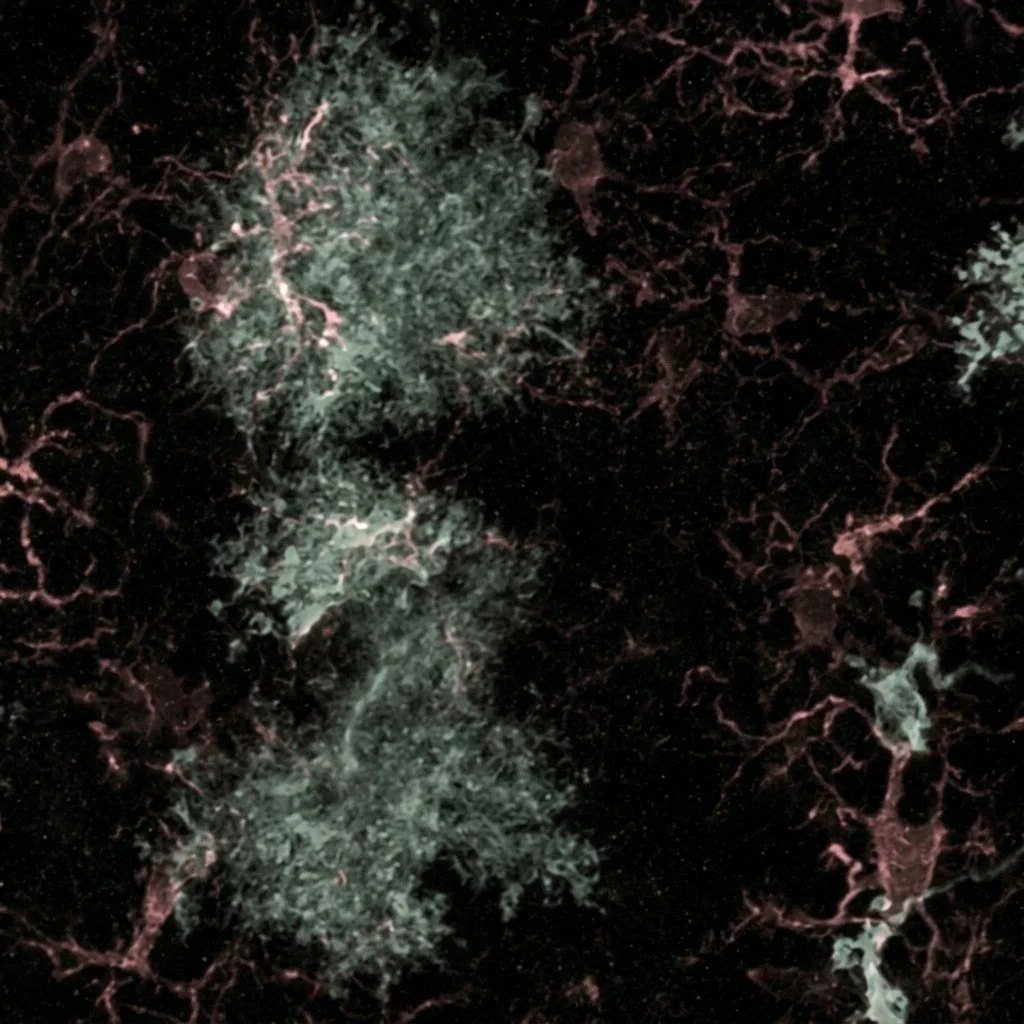
We study how the brain’s immune cells, called microglia, help build the neural circuits that support social behavior. During development, the brain produces more cells and connections than it ultimately needs. Microglia shape these processes by removing some cells and synaptic connections while supporting the survival of others.
Our research asks how these decisions are regulated: why do microglia target some cells but not others? How do these processes differ between individuals? How do small changes during development produce lasting differences in neural circuitry and behavior?
We approach these questions across multiple levels, combining developmental cell birth tracking, high-resolution 3D cellular imaging, molecular and pharmacological manipulation, cell type-specific viral tools, and behavioral analysis. By connecting individual cellular events to circuit organization and behavior, we aim to uncover the mechanisms that build—and sometimes disrupt—the social brain.
Astrocytes and Neural Circuit Function
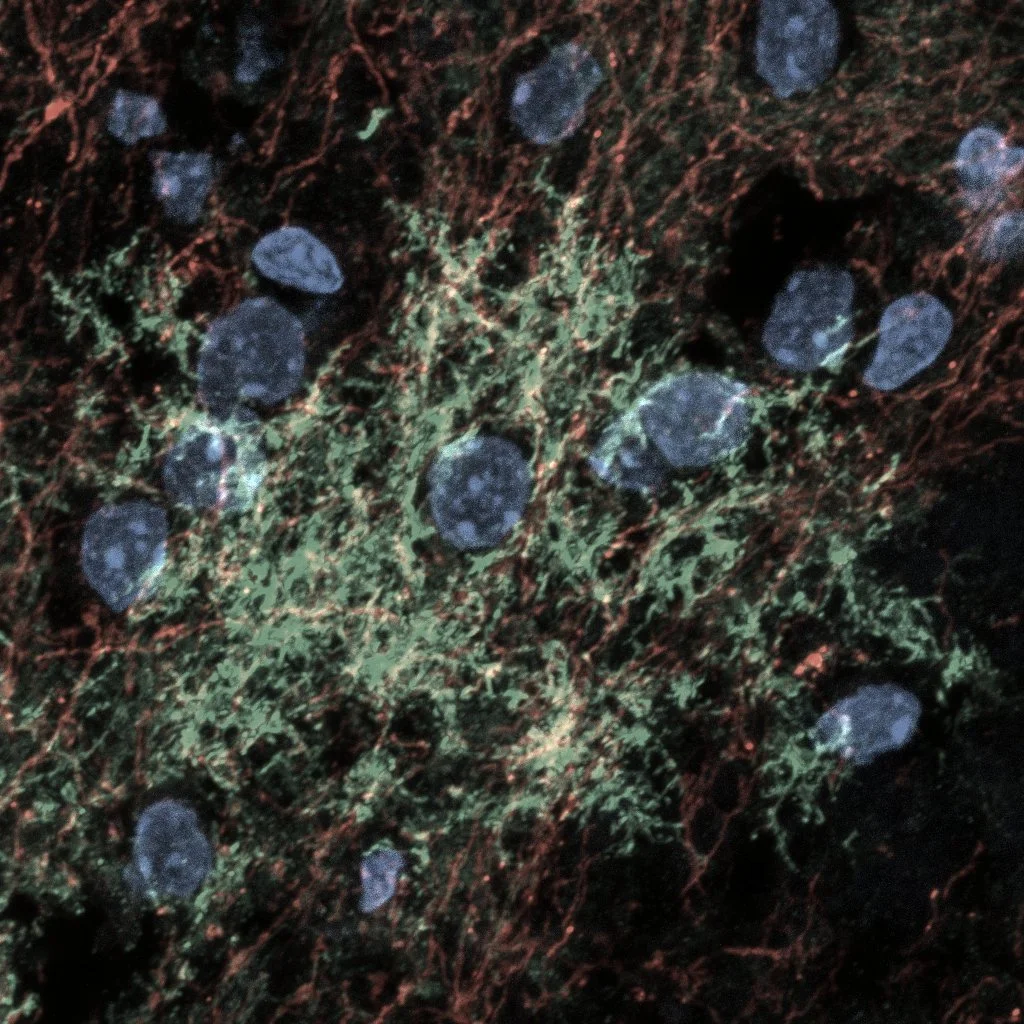
Astrocytes are among the most abundant cells in the brain, yet their role in neural circuit function remains far less understood than that of neurons. We now know that astrocytes are intimately connected to neural circuits where they sense neural activity, regulate the synaptic environment, and communicate with neurons in ways that influence circuit function.
Our lab is investigating the molecular pathways that govern these interactions and what they mean for behavior. We are particularly interested in how astrocytes regulate the activity and plasticity of neural circuits involved in motivation, reward, and other complex behaviors, and how these processes change in response to experience or disease-related states.
Our broader goal is to understand the principles by which astrocytes regulate neural circuits across different behavioral states. We combine cell type-specific manipulation, high-resolution 3D imaging, patch clamp electrophysiology, ex vivo/in vivo calcium imaging, and quantitative behavioral analysis to connect astrocyte function to behavior.

Experience-Dependent Changes in Glial Function
Beyond their role in shaping brain development, microglia continue to actively remodel neural circuits throughout life. Our lab has found that microglia can begin “over-editing” in response to stress, pruning astrocyte processes in ways that disconnect astrocytes from neural circuits and impairing their function.
We’re investigating how stress during adolescence, a critical developmental period, sets this process in motion and leaves a lasting mark on reward sensitivity and behavior in adulthood. To track these processes across time, we combine high-resolution 3D imaging, optogenetics and chemogenetics, patch clamp electrophysiology, ex vivo and in vivo calcium imaging, and transcriptomics — all with detailed behavioral analysis. This integrated approach lets us trace a single early-life stressor from a cellular event to a lasting behavioral outcome.